
The indicative rate and the spot market
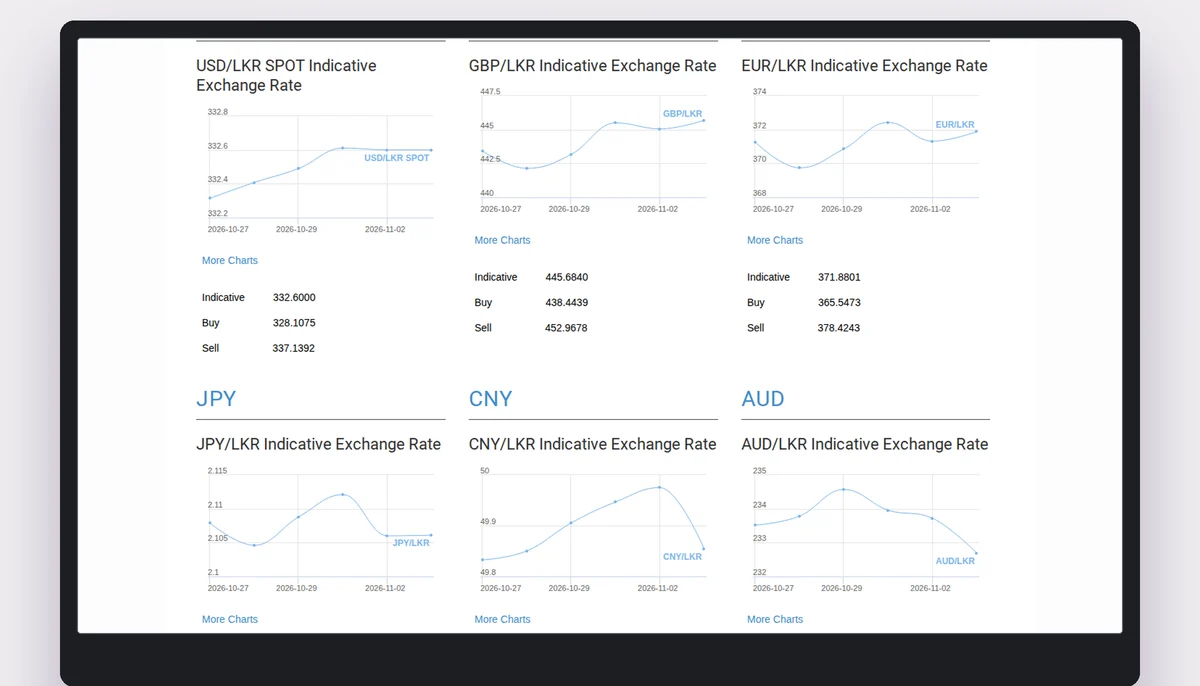
The Central Bank of Sri Lanka publishes an indicative USD/LKR spot rate each business day. It is a weighted average of the previous business day's interbank spot deals, including the bank's own interventions. The rate is called 'indicative' because it indicates where the market traded, but it is not a price anyone is obliged to deal at. The bank stopped publishing a middle rate with a variation margin in 2023, and now publishes only the indicative rate.
What 'indicative rate' means
The indicative rate is a weighted average of the previous business day's interbank spot deals, including the central bank's own interventions. It is a summary of where the market traded, not an offer to anyone. No bank is obliged to deal at the indicative rate, and no customer can demand it. It is the figure the news prints, and it is the reference against which the banks' boards are measured.
The indicative rate is published once per business day, after the interbank market closes. It is a lagging indicator: it tells you where the market was, not where it is now. The banks' boards are set at the opening of the next business day, and they reflect the banks' expectations of where the market will go, not just where it has been.
Why the Central Bank stopped publishing a middle rate
For many years, the Central Bank published a middle rate with a variation margin, which was a band around the middle rate. The variation margin was a range within which the rupee was allowed to move. In 2023, the bank stopped publishing the middle rate and the variation margin, and moved to publishing only the indicative rate.
The change was part of a move to a more flexible exchange rate. The bank had been intervening in the market to keep the rupee within the variation margin, but the interventions were costly and the margin was seen as a target. By publishing only the indicative rate, the bank signalled that the rupee would be allowed to float more freely, and that the indicative rate was a reference, not a target.
The indicative rate is a reference, not a price
The indicative rate is a reference because it is a weighted average of interbank deals, which are large and between banks. A retail customer's transaction is smaller and carries more handling cost, so the bank's board is different. The indicative rate is not a price anyone is obliged to deal at; it is a benchmark.
The benchmark is used by the news, by businesses for accounting, and by the public for reference. But when you go to a bank to buy dollars, you will pay the bank's sell rate, which is above the indicative rate. When you sell dollars, you will receive the bank's buy rate, which is below the indicative rate. The indicative rate is the middle of the market, and the bank's spread is the distance from the middle.
How the indicative rate is calculated
The indicative rate is the weighted average of the previous business day's interbank spot deals, including the central bank's own interventions. The deals are between banks, and they are for large amounts. The central bank's interventions are included in the average, because they are part of the market.
The central bank does not publish the individual deals, only the weighted average. The average is weighted by the size of the deals, so a large deal has more influence than a small one. The indicative rate is a single number, but it hides the range of rates at which deals were done. The range can be wide, especially on a volatile day.
The spot market and the indicative rate
The spot market is where currencies are traded for immediate delivery. In Sri Lanka, the interbank spot market is where banks trade dollars and rupees among themselves. The indicative rate is a weighted average of the spot deals done in that market on the previous business day.
The spot market is not open to the public. A retail customer cannot deal in the interbank market; they must deal with a bank at the bank's board. The bank's board is set in relation to the indicative rate, but it is not the same as the indicative rate. The bank's board is the price the bank will deal at, and it includes the bank's spread.
What the indicative rate is not
The indicative rate is not a forecast. It is a record of the past, not a prediction of the future. The next business day's rate will be set by the interbank market, and no one can know it in advance. The indicative rate is not a target; the Central Bank has stated that it does not target a specific level for the rupee.
The indicative rate is not a price. No bank is obliged to deal at it, and no customer can demand it. The indicative rate is a reference, and the banks' boards are the prices. A reader who wants to know the rate before a transaction should look at a bank's board, not at the indicative rate.
Key facts
Read next
Questions about today's rate
What is the indicative rate?
It is the Central Bank of Sri Lanka's weighted average of the previous business day's interbank spot deals, including the bank's own interventions. It is a reference, not a price anyone is obliged to deal at.
Why did the Central Bank stop publishing a middle rate?
The bank stopped publishing a middle rate with a variation margin in 2023 as part of a move to a more flexible exchange rate. The variation margin was seen as a target, and the bank wanted to signal that the rupee would float more freely.
Is the indicative rate the same as the spot rate?
The indicative rate is based on the spot market, but it is a weighted average of the previous day's deals. The spot rate is the rate for immediate delivery; the indicative rate is a summary of where the spot market traded.
Can I deal at the indicative rate?
No. The indicative rate is a reference, not an offer. No bank is obliged to deal at it. You must deal at a bank's board, which will be above the indicative rate when you buy dollars and below it when you sell.
How often is the indicative rate published?
It is published once per business day, after the interbank market closes. It is not updated during the day. The banks' boards are set at the opening of the next business day.
Dollars as a contract, not banknotes
FxPro offers currency pairs and gold as contracts for difference. No metal or banknotes are delivered; a contract is settled in the account's currency. Opening an account takes identification and a day or two, and a practice account costs nothing.